
Karabakh’s Longest Year
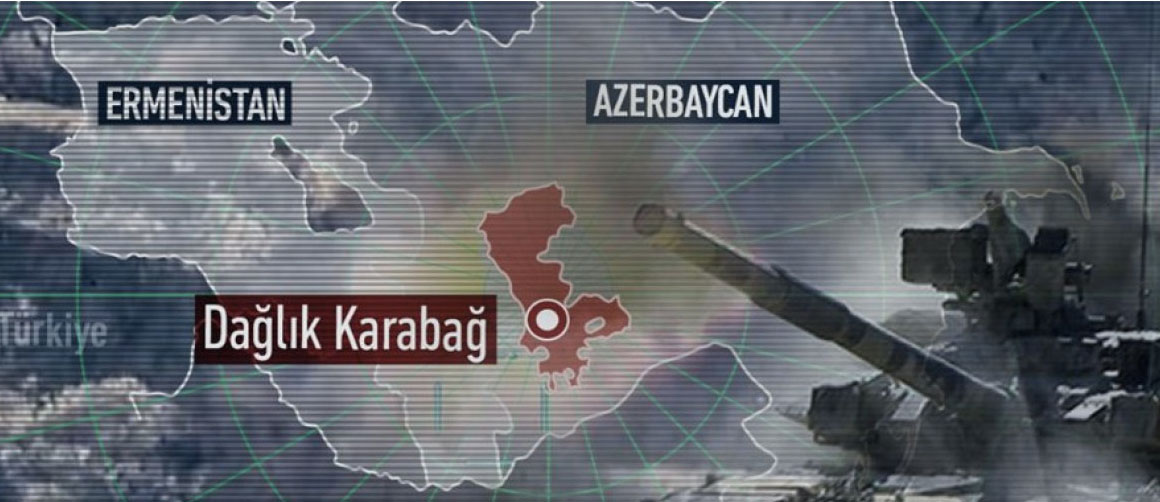
One year has passed since the 44-day war ended between Azerbaijan and Armenia. The war is over, but the peace is not coming. Every war ultimately aims at peace. Mankind has always “fought for peace”, though it may sound ironic. In other words, continuing the war forever will not benefit any of the warring parties. It’s been almost 400 years since Hobbes said that no one would be safe if the constant state of war continued. Well, then why can’t Azerbaijan and Armenia make peace?
Even the weapons used by both countries in the war were imported. In other words, why can’t these two countries which are not able to fight even with their own weapons -which do not have the potential to produce weapons- cannot come to an agreement? Quick solution can be: If the weapons used by both countries in the war are imported, then both countries should have an arms embargo and this embargo should be respected at a high level. I claim that peace will be reached in a very short time. But that would be a utopian approach. Because this proposal is a proposal that countries that feed on the arms industry will never accept.
 Which countries are among the manufacturers of weapons used in the last war? 4/3 of the guns are Russian made. Well, which country invited the parties to the “peace table”? Russia. Don’t you think there is something strange here?! Arm countries or sell weapons, but still go around under the peace mission… A straight logic tells us: Peace reconciliation of both countries will have a negative impact on the Russian arms industry, at least in the near future. Can Russia, which feeds on the arms industry, accept this situation? No. For Russia, the war between Azerbaijan and Armenia should continue, it should never end. There may be temporary ceasefires, but there should never be a final peace. Therefore, the peoples of these two countries must remain hostile to each other so that one of the parties constantly seeks “big brother” for itself.
Another interesting point is that there is an inverse proportion between the Karabakh problem and the independence of these two countries. In other words, in 1919, both countries, as independent states, entered into certain local conflicts around this issue and later came to a compromise. But at the time of the events that followed, Azerbaijan and Armenia were not independent states. So, for example, when the “bad events” in Gafan, Gorus, Sumgayit and Ganja in 1988, and demonstrations held almost daily in the former Nagorno-Karabakh Autonomous Province, neither Azerbaijan nor Armenia was independent. In both countries, there were units of the Soviet Army. Moscow oversaw the power and judicial organs of both countries. In other words, within an “empire”, in front of the “empire”, two peoples were “attacking each other.” Couldn’t the USSR, which was able to stop and even defeat the Nazis, and brought peace and brotherhood to all over the world from Cuba to Vietnam, not intervene in the chaos next to it? The USSR was weakened, its power was exhausted, it was in economic turmoil, etc. We cannot accept any explanation in kind of these. Of course, maybe if the USSR had entered the war with the USA in those years, it would have been defeated. But he was not in a position to solve the problem between Azerbaijan and Armenia after all. Then we should change our perspective on the issue and say: It was the USSR itself that caused the problem between the two countries. There is an imperial tactic that is very well known in world history. If an empire is withdrawing from its colony, it will definitely create a “problem” in that colony. Because even if it physically withdraws from the region, the region cannot break away from it. If we were to vulgarize our words even more; Before the USSR entered andropause, it raped the Caucasus region and several children were born from this encroachment. Abkhazia, South Ossetia and Karabakh… Now, one of these three children, Karabakh’s father is Moscow. But Azerbaijan and Armenia are constantly “fighting” to become a mother to the child. There is one thing that both Azerbaijan and Armenia forget: whoever wins the maternity race, the child’s father is Moscow. Worse still, this child is a product of rape, born out of this region’s relationship with the USSR against their will.
Which countries are among the manufacturers of weapons used in the last war? 4/3 of the guns are Russian made. Well, which country invited the parties to the “peace table”? Russia. Don’t you think there is something strange here?! Arm countries or sell weapons, but still go around under the peace mission… A straight logic tells us: Peace reconciliation of both countries will have a negative impact on the Russian arms industry, at least in the near future. Can Russia, which feeds on the arms industry, accept this situation? No. For Russia, the war between Azerbaijan and Armenia should continue, it should never end. There may be temporary ceasefires, but there should never be a final peace. Therefore, the peoples of these two countries must remain hostile to each other so that one of the parties constantly seeks “big brother” for itself.
Another interesting point is that there is an inverse proportion between the Karabakh problem and the independence of these two countries. In other words, in 1919, both countries, as independent states, entered into certain local conflicts around this issue and later came to a compromise. But at the time of the events that followed, Azerbaijan and Armenia were not independent states. So, for example, when the “bad events” in Gafan, Gorus, Sumgayit and Ganja in 1988, and demonstrations held almost daily in the former Nagorno-Karabakh Autonomous Province, neither Azerbaijan nor Armenia was independent. In both countries, there were units of the Soviet Army. Moscow oversaw the power and judicial organs of both countries. In other words, within an “empire”, in front of the “empire”, two peoples were “attacking each other.” Couldn’t the USSR, which was able to stop and even defeat the Nazis, and brought peace and brotherhood to all over the world from Cuba to Vietnam, not intervene in the chaos next to it? The USSR was weakened, its power was exhausted, it was in economic turmoil, etc. We cannot accept any explanation in kind of these. Of course, maybe if the USSR had entered the war with the USA in those years, it would have been defeated. But he was not in a position to solve the problem between Azerbaijan and Armenia after all. Then we should change our perspective on the issue and say: It was the USSR itself that caused the problem between the two countries. There is an imperial tactic that is very well known in world history. If an empire is withdrawing from its colony, it will definitely create a “problem” in that colony. Because even if it physically withdraws from the region, the region cannot break away from it. If we were to vulgarize our words even more; Before the USSR entered andropause, it raped the Caucasus region and several children were born from this encroachment. Abkhazia, South Ossetia and Karabakh… Now, one of these three children, Karabakh’s father is Moscow. But Azerbaijan and Armenia are constantly “fighting” to become a mother to the child. There is one thing that both Azerbaijan and Armenia forget: whoever wins the maternity race, the child’s father is Moscow. Worse still, this child is a product of rape, born out of this region’s relationship with the USSR against their will.
 Now I seem to hear many readers ask: “Are you suggesting that both countries give up on Karabakh?” No. I make no such recommendation. I suggest: Before the maternity case, a paternity denial should be made. In other words, both Azerbaijan and Armenia should be able to say to Russia: “You may be the biological father of this child, but you cannot and will not be the legal father of this child.”
So how will this be? Very easy. As we emphasized in my previous article, both countries should sit at the peace table without Russia. All the material and moral damages caused by Russia to both countries should be discussed at the table. Perhaps the last issue to be discussed should be Karabakh. In other words, until the Karabakh problem comes, these two countries have a lot of issues to talk about. In fact, if the conversation is started without opening the Karabakh issue directly, more positive developments can be achieved. But I repeat again; Meeting without Russia, speech without Russia, solution without Russia…
These were our wishes. In other words, we have not seen any action regarding what we have said. So, let’s go back to the current situation, the “everyday politics” followed by both countries. After the 44-day war, Azerbaijan started to see the Karabakh problem as its own internal problem. More precisely, the Azerbaijani government is giving the message to its public that “Karabakh is an internal matter for us”. Well, does this message have a counterpart in Azerbaijan’s foreign policy? The fact that Azerbaijan does not see the OSCE Minsk Group to continue its activities shows that it insists on the principle of “Karabakh is our domestic issue” in foreign policy. However, the fact that the Russian peacekeeping force is deployed on its own de-jure land and Russia’s involvement in all the works related to Karabakh shows that the principle advocated by the Azerbaijani government is not taken seriously by Moscow. When the Russian peacekeepers leave that land, Karabakh may become an internal matter of Azerbaijan. But for now, the difficulties faced by the Azerbaijani government in foreign policy make “untrue”, what it tells the domestic public.
So, what is the situation in Armenia? Armenia is developing policies in favor of keeping Karabakh as an international issue. Since 1994, Armenia has been defending the thesis that the Karabakh conflict is not a matter of Azerbaijan and Armenia. It can also be said that Armenia, which developed different policies:
to unite Karabakh with Armenia in 1991,
after 1994, tried to make Karabakh an independent state,
and to unite it with Armenia between 2018-2020.
In other words, those who came to power in Armenia do not even understand what they want in connection with Karabakh. In other words, Armenia has always had a complex Karabakh strategy. Of course, the reasons for Armenia’s lack of a clear Karabakh strategy can be explainable are due to the diaspora factor, the interests of foreign powers, etc. However, the reality is that Armenia does not have a clear and defined Karabakh strategy. In short, Armenia is taking a stand in favor of keeping the Karabakh issue an international issue these days. And the fact that Armenia continues to develop such an attitude means paving the way for third countries, especially Russia, to constantly cause chaos in the region.
Now I seem to hear many readers ask: “Are you suggesting that both countries give up on Karabakh?” No. I make no such recommendation. I suggest: Before the maternity case, a paternity denial should be made. In other words, both Azerbaijan and Armenia should be able to say to Russia: “You may be the biological father of this child, but you cannot and will not be the legal father of this child.”
So how will this be? Very easy. As we emphasized in my previous article, both countries should sit at the peace table without Russia. All the material and moral damages caused by Russia to both countries should be discussed at the table. Perhaps the last issue to be discussed should be Karabakh. In other words, until the Karabakh problem comes, these two countries have a lot of issues to talk about. In fact, if the conversation is started without opening the Karabakh issue directly, more positive developments can be achieved. But I repeat again; Meeting without Russia, speech without Russia, solution without Russia…
These were our wishes. In other words, we have not seen any action regarding what we have said. So, let’s go back to the current situation, the “everyday politics” followed by both countries. After the 44-day war, Azerbaijan started to see the Karabakh problem as its own internal problem. More precisely, the Azerbaijani government is giving the message to its public that “Karabakh is an internal matter for us”. Well, does this message have a counterpart in Azerbaijan’s foreign policy? The fact that Azerbaijan does not see the OSCE Minsk Group to continue its activities shows that it insists on the principle of “Karabakh is our domestic issue” in foreign policy. However, the fact that the Russian peacekeeping force is deployed on its own de-jure land and Russia’s involvement in all the works related to Karabakh shows that the principle advocated by the Azerbaijani government is not taken seriously by Moscow. When the Russian peacekeepers leave that land, Karabakh may become an internal matter of Azerbaijan. But for now, the difficulties faced by the Azerbaijani government in foreign policy make “untrue”, what it tells the domestic public.
So, what is the situation in Armenia? Armenia is developing policies in favor of keeping Karabakh as an international issue. Since 1994, Armenia has been defending the thesis that the Karabakh conflict is not a matter of Azerbaijan and Armenia. It can also be said that Armenia, which developed different policies:
to unite Karabakh with Armenia in 1991,
after 1994, tried to make Karabakh an independent state,
and to unite it with Armenia between 2018-2020.
In other words, those who came to power in Armenia do not even understand what they want in connection with Karabakh. In other words, Armenia has always had a complex Karabakh strategy. Of course, the reasons for Armenia’s lack of a clear Karabakh strategy can be explainable are due to the diaspora factor, the interests of foreign powers, etc. However, the reality is that Armenia does not have a clear and defined Karabakh strategy. In short, Armenia is taking a stand in favor of keeping the Karabakh issue an international issue these days. And the fact that Armenia continues to develop such an attitude means paving the way for third countries, especially Russia, to constantly cause chaos in the region.
 However, despite all this, I believe that both countries can make peace. The resentment of peoples can be given meaning, and even this resentment can last for many years. But states cannot be offended by each other. Therefore, I believe that Azerbaijan and Armenia can “forget” their resentment at the state level. And the way to this is through bilateral negotiations, bilateral dialogue…
Which countries are among the manufacturers of weapons used in the last war? 4/3 of the guns are Russian made. Well, which country invited the parties to the “peace table”? Russia. Don’t you think there is something strange here?! Arm countries or sell weapons, but still go around under the peace mission… A straight logic tells us: Peace reconciliation of both countries will have a negative impact on the Russian arms industry, at least in the near future. Can Russia, which feeds on the arms industry, accept this situation? No. For Russia, the war between Azerbaijan and Armenia should continue, it should never end. There may be temporary ceasefires, but there should never be a final peace. Therefore, the peoples of these two countries must remain hostile to each other so that one of the parties constantly seeks “big brother” for itself.
Another interesting point is that there is an inverse proportion between the Karabakh problem and the independence of these two countries. In other words, in 1919, both countries, as independent states, entered into certain local conflicts around this issue and later came to a compromise. But at the time of the events that followed, Azerbaijan and Armenia were not independent states. So, for example, when the “bad events” in Gafan, Gorus, Sumgayit and Ganja in 1988, and demonstrations held almost daily in the former Nagorno-Karabakh Autonomous Province, neither Azerbaijan nor Armenia was independent. In both countries, there were units of the Soviet Army. Moscow oversaw the power and judicial organs of both countries. In other words, within an “empire”, in front of the “empire”, two peoples were “attacking each other.” Couldn’t the USSR, which was able to stop and even defeat the Nazis, and brought peace and brotherhood to all over the world from Cuba to Vietnam, not intervene in the chaos next to it? The USSR was weakened, its power was exhausted, it was in economic turmoil, etc. We cannot accept any explanation in kind of these. Of course, maybe if the USSR had entered the war with the USA in those years, it would have been defeated. But he was not in a position to solve the problem between Azerbaijan and Armenia after all. Then we should change our perspective on the issue and say: It was the USSR itself that caused the problem between the two countries. There is an imperial tactic that is very well known in world history. If an empire is withdrawing from its colony, it will definitely create a “problem” in that colony. Because even if it physically withdraws from the region, the region cannot break away from it. If we were to vulgarize our words even more; Before the USSR entered andropause, it raped the Caucasus region and several children were born from this encroachment. Abkhazia, South Ossetia and Karabakh… Now, one of these three children, Karabakh’s father is Moscow. But Azerbaijan and Armenia are constantly “fighting” to become a mother to the child. There is one thing that both Azerbaijan and Armenia forget: whoever wins the maternity race, the child’s father is Moscow. Worse still, this child is a product of rape, born out of this region’s relationship with the USSR against their will.
Now I seem to hear many readers ask: “Are you suggesting that both countries give up on Karabakh?” No. I make no such recommendation. I suggest: Before the maternity case, a paternity denial should be made. In other words, both Azerbaijan and Armenia should be able to say to Russia: “You may be the biological father of this child, but you cannot and will not be the legal father of this child.”
So how will this be? Very easy. As we emphasized in my previous article, both countries should sit at the peace table without Russia. All the material and moral damages caused by Russia to both countries should be discussed at the table. Perhaps the last issue to be discussed should be Karabakh. In other words, until the Karabakh problem comes, these two countries have a lot of issues to talk about. In fact, if the conversation is started without opening the Karabakh issue directly, more positive developments can be achieved. But I repeat again; Meeting without Russia, speech without Russia, solution without Russia…
These were our wishes. In other words, we have not seen any action regarding what we have said. So, let’s go back to the current situation, the “everyday politics” followed by both countries. After the 44-day war, Azerbaijan started to see the Karabakh problem as its own internal problem. More precisely, the Azerbaijani government is giving the message to its public that “Karabakh is an internal matter for us”. Well, does this message have a counterpart in Azerbaijan’s foreign policy? The fact that Azerbaijan does not see the OSCE Minsk Group to continue its activities shows that it insists on the principle of “Karabakh is our domestic issue” in foreign policy. However, the fact that the Russian peacekeeping force is deployed on its own de-jure land and Russia’s involvement in all the works related to Karabakh shows that the principle advocated by the Azerbaijani government is not taken seriously by Moscow. When the Russian peacekeepers leave that land, Karabakh may become an internal matter of Azerbaijan. But for now, the difficulties faced by the Azerbaijani government in foreign policy make “untrue”, what it tells the domestic public.
So, what is the situation in Armenia? Armenia is developing policies in favor of keeping Karabakh as an international issue. Since 1994, Armenia has been defending the thesis that the Karabakh conflict is not a matter of Azerbaijan and Armenia. It can also be said that Armenia, which developed different policies:
to unite Karabakh with Armenia in 1991,
after 1994, tried to make Karabakh an independent state,
and to unite it with Armenia between 2018-2020.
In other words, those who came to power in Armenia do not even understand what they want in connection with Karabakh. In other words, Armenia has always had a complex Karabakh strategy. Of course, the reasons for Armenia’s lack of a clear Karabakh strategy can be explainable are due to the diaspora factor, the interests of foreign powers, etc. However, the reality is that Armenia does not have a clear and defined Karabakh strategy. In short, Armenia is taking a stand in favor of keeping the Karabakh issue an international issue these days. And the fact that Armenia continues to develop such an attitude means paving the way for third countries, especially Russia, to constantly cause chaos in the region.
However, despite all this, I believe that both countries can make peace. The resentment of peoples can be given meaning, and even this resentment can last for many years. But states cannot be offended by each other. Therefore, I believe that Azerbaijan and Armenia can “forget” their resentment at the state level. And the way to this is through bilateral negotiations, bilateral dialogue…