
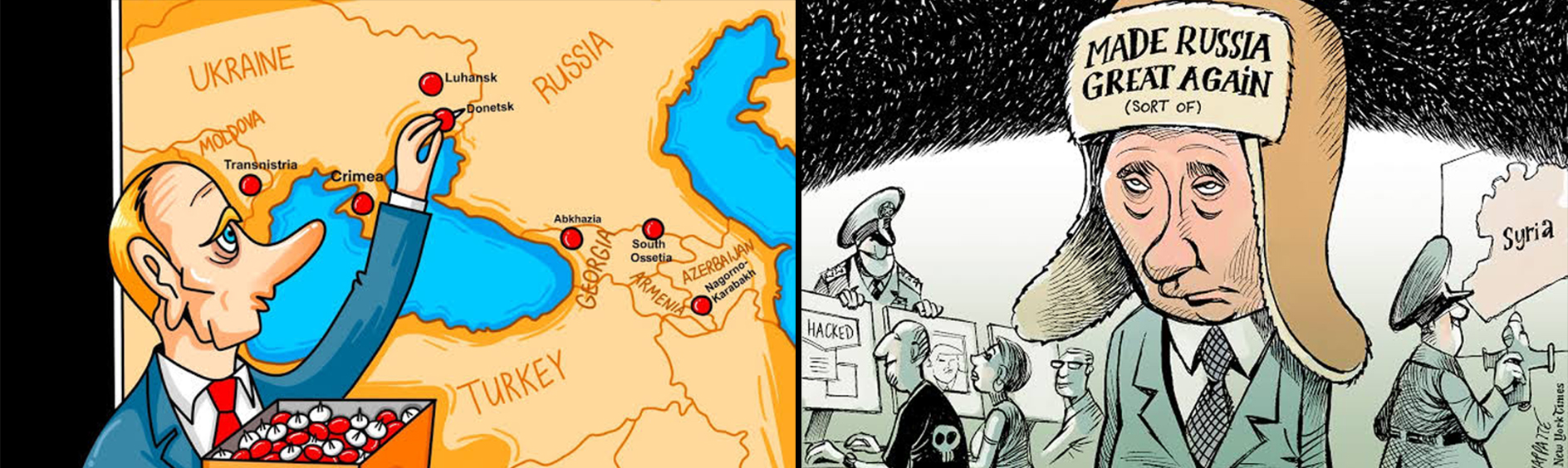
Karabakh's New Gardener: Russian "Peace Force"
Hayyam Celilzade
In our previous articles, we argued that the Karabakh conflict was over, but that it has metamorphosed. The developments in the Caucasus region in recent months show the nature of the metamorphosis in question.
The Armenian people said “Pashinyan” again in the elections. It is understood that Pashinyan, who has developed a Western-oriented policy, will not give up on this policy. Although it has given moderate messages towards Russia, it is impossible to say that Armenia is not a traveler to the West. It may not be possible for Pashinyan to see the completion of the completion of Armenia's integration with the West. However, it is obvious that this process is progressing rapidly, irreversibly. It would be naive to say that Putin does not see the reality of an Armenia slipping away from Russia. Therefore, it would be wrong to think that Putin did not develop a strategy that works simultaneously with such a reality. If Armenia displays a Westernist attitude like Georgia in the future, Russia's "brain death" may occur in the South Caucasus. It is a fact that Azerbaijan has followed a policy of balance since 1993, and has never "heartedly satisfied" Moscow with its neither Westernist nor Russianist strategy. At the same time, the fact that Azerbaijan's theoretical fraternity with Turkey has also been proven in practice (the Shusha Declaration) has greatly distressed Moscow. In other words, Azerbaijan is not a "port" for Russia to continue its existence in the South Caucasus. Losing Georgia, Azerbaijan and then Armenia negatively affects both the Caucasus and Central Asia policies of Russia. When this is the case, to think that Putin did not take any precautions and Moscow has not developed a strategy that will exist in parallel with Armenia's journey to the West would be to fail to understand Russian politics. So, what is Russia's new Karabakh strategy?
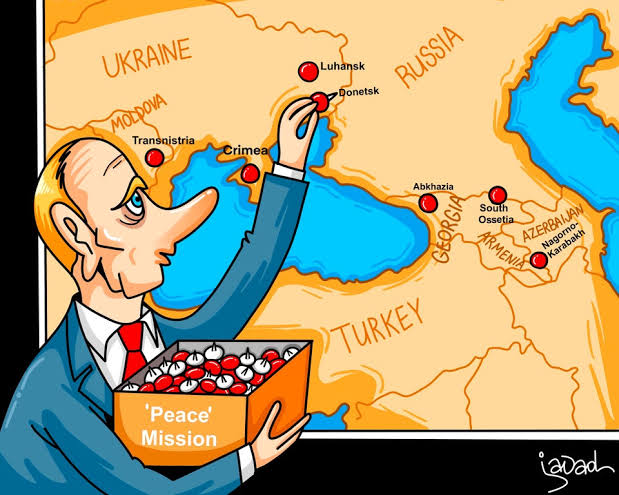
With the ceasefire agreement dated November 10, 2020, Russia settled on approximately 3,000 square kilometers of land belonging to de-jure Azerbaijan under the name of "peace force". The entire control of the said 3,000 square kilometers of land is in the hands of Russia. The ceasefire agreement declares that the Russian peacekeepers will ensure the lives of Armenian civilians living in this region and will eliminate any negative situation that may occur. The agreement, which stipulates that Russian peacekeepers remain in the region for a renewable five-year period, contains ambiguous points. In addition, the text of the agreement, which was circulated in the Russian press the day after the agreement was signed, differs from the main text. The interesting thing is that the original text is not in force, but the text as it is circulated: Although the Azerbaijani side is based on the original text...
The fact that the November 10 agreement contains ambiguous points and does not clarify many issues paves the way for the said document to yield results in favor of Russia both in law and in practice. Therefore, the agreement may have consequences that may shackle “Azerbaijan's feet”. And one of these shackles concerns the status of 3,000 square kilometers of land. Months ago, the "government", which claiming to represent Armenians living on 3,000 square kilometers of land, passed a law that Russian is the second official language. There was no comment from Russia on the issue. Apparently, the so-called government's so-called decision pleased Moscow.
What does Russia want to do on 3,000 square kilometers of land? In my opinion, he wants to create a new "Armenia" that “travels to Russia” parallel with Armenia's journey to the West. In other words, if the UN-recognized Armenia, whose capital is Yerevan, will follow Georgia's path and if it does, Moscow aims to build a new "Armenia" with its "capital" Khankendi (Stepanakert) as its servant. It doesn't matter what the name of this new servant state will be, it can be Artsak, Fartsak or Furtsak. Even the Armenians who will live in the region are not important for Moscow. According to official figures, the number of people living on 3,000 square kilometers of land is 120,000. This number can decrease or increase. As a matter of fact, after giving Russian passports to these people (such a practice has not been started so far, but there is no guarantee that it will not be), their ethnic identity will no longer matter. The important thing for Moscow is to exist in the South Caucasus under the pretext of protecting the "rights" of these people. Armenians living on 3,000 square kilometers of land do not/will not benefit from this protection just because they are Armenians. They have this "protection" because they are pawns that will enable Russia to exist in the South Caucasus. It would be naive to claim that Russia is the defender of legal rights of peoples. It is obvious what Russia has done to Ukraine - which it has called a brotherly people for centuries- for its own imperialist interests. Therefore, the Armenians living on 3,000 square kilometers of land belonging to de-jure Azerbaijan should not happily welcome Russia's "protection". Russia can fail the Armenians living on 3,000 square kilometers of land at any time.
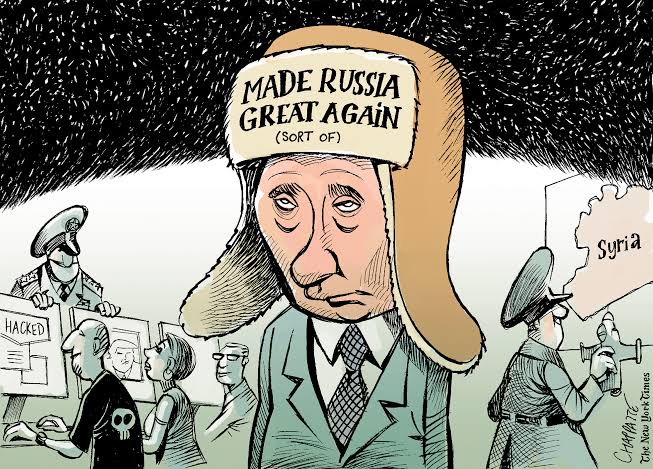
To sum up, Russia can put “Plan B” into action, parallel with the strategy that Armenia will follow. And the developments in the last months inform that he has put “Plan B” on the field. The power to implement Russia's “Plan B” will be felt to the extent that Armenia approaches the West. As Armenia approaches the West, 3,000 square kilometers of land will be brought closer to Moscow. In accordance with the strategy that Azerbaijan will follow in this process, the status issue of the 3,000 square kilometers land will sometimes be brought by Russia to the agenda and sometimes not. The worst scenario for Azerbaijan: The emergence of an autonomy dependent on Russia or the establishment of an puppet state on its 3,000 square kilometers land. However, this can only be possible if Azerbaijan turns its back on Russia and integrates completely with the West. But I do not think that Azerbaijan will adopt such a strategy in the near term. It seems that Azerbaijan will continue to maintain its balance policy in the near term.
And yet, what kind of Karabakh strategy should Azerbaijan follow? In my opinion, the answer to this question should be sought in a context that includes Armenia. I do not think that Azerbaijan will develop a correct Karabakh strategy without establishing direct contacts with Armenia (in spite of everything). Every contact established or to be established through Russia works against both countries. In addition, an easier dialogue can be established with Armenia, which is directed to the West. In these dialogues, it should be remembered how Russia is positioned in the history of both countries and what Russia promises for the future of both countries should be discussed.
final note
In our next articles, we will discuss the ceasefire violations that break out almost every day on the border of Azerbaijan and Armenia and what should be the position of Turkey in that both countries will sit at the table without Russia.