
With Capital-Communist Administration; Past, Present, and Future of China
"Life has accelerated, and it is accelerating every day. In ancient times, people managed for life with the experiences they gained until they became adults. Only extraordinary natural disasters such as earthquakes and droughts could shake the fiction of life. Of course, the development of human beings through their intelligence and skills had a serious impact on the dynamics of social life. But its frequency was shallow. They did not experience the change that we experience in a year, even in a thousand years."
The name that best defined the metamorphosis of the world through the modern age is David Harvey. Harvey, one of the most influential theorists of contemporary sociology, has memorized the post-modern period, which he summarized as "time and space compression," with three keywords.
The compression of time and space will have practical effects that can change the algorithms of the world, such as "acceleration of the rate of change" and "shortening of natural cycles." This metamorphosis can lay dynamite based on many doctrines or assumptions that are considered unbeatable. Let's put aside the other aspects of the painful changes we have/will experience and examine the impact of this transformation on the state management mechanisms
Life has genuinely accelerated, and it is increasing its speed with each passing day. In ancient times, people managed for life with the experiences they gained until they became adults. Only extraordinary natural disasters such as earthquakes and droughts could shake the fiction of life. Of course, the development of human beings through their intelligence and skills had a severe impact on the dynamics of social life. But its frequency was shallow. They did not experience the change we experience in one year, even in a thousand years. The intervals of radical breaks, such as the discovery of fire, writing, and the wheel, were so rare that they could be measured in millennia. There were adverse reactions to these ruptures, both on an institutional basis and on an individual basis. The long time required for adaptation also allowed for loose, slow-paced change. When you did not adapt to innovations individually, your social position or comfort of life would not suffer much. Moreover, no one had the desire to hold accountable or the guilt anxiety, since even the fact that legal structures such as the state or commercial institutions did not adapt to the new order developed through inventions or remained slow did not show their effects in the short term. The mistake made by the state in adapting to the changing times might have collapsed the state a hundred years later, but this was no longer the problem of those who made the mistake but of historians. Is it so now? The mistake made by the state in adapting to the changing times might have collapsed the state a hundred years later, but this was no longer the problem of those who made the mistake, but of historians. Is it so now? The mistake made by the state in adapting to the changing times might have collapsed the state a hundred years later, but this was no longer the problem of those who made the mistake, but of historians. Is it so now?
There is as much as Ustad İsmet Özel said, "Everything happened while I was alive, let people know this / the flood broke out while I was alive / the universe was created anew while I was alive." Human life remains long enough to contemplate a different world, almost all fragments redesigned at this rate of change. It is important for people to react quickly to change, but it is much more critical for states/institutions to respond quickly.
The modern world, whose philosophical background was constructed by positivists, became the leading cause of the change in question through science and technology. Since positivism is not an ideology isolated from social life, it has not stopped imposing its doctrine on humanity in many areas, from politics to economy, from social life to social perceptions. Thus, "democracy," one of the most precious children of this total encirclement, was crowned.
The democratic-centered design of politics has a severe counterpart to ordinary people. There is a side that tickles the soul as if he has the power to decide. Theorists, who somehow made democracy current, were tempted to say, "We have come to the end of the world," when they saw this favor in people. However, now a child of the positivist mind is about to send another child to the gallows.
Democracy is a form of government that tends to please everyone, including being polyphonic, being open to different opinions, and as an extension of this, listening to many nonsensical suggestions or pretending to listen. It is obvious that this fiction makes the decision-making mechanisms of democracy, which is marketed as an ideal, rather cumbersome. In other words, whether you are a state, a company, or an NGO, if you are governed by democratic practices, you have fallen into a structure that takes decisions slowly and cannot react quickly to change. On the one hand, the world is changing at a dizzying pace; on the other hand, democratic institutions are responding slowly. This is the fate of losing, by definition.
I think that Europe, which is the father of democracy and where it is applied most intensely, will receive the heaviest blow in this process in parallel. Democracy is now an outdated form of government, and nations that insist on democracy are bound to lose in the not too long term.
Here we face a complex problem; Since democracy is losing its validity for today's world, what kind of institution should we establish for a powerful political model? While seeking an answer to this question, we need to adopt an ambivalent approach not to stray too far from democracy but to abandon the central axis of democracy. Let's open.
Our ultimate goal is to create a quick decision-making mechanism. This is our essence. Democracy hinders us in this goal.
On the one hand, we need to make quick decisions; on the other hand, it is essential to build a fiction that will keep the accuracy of these decisions at the highest level. Here, too, we need to prioritize the philosophical background of democracy. In fact, this is not a philosophy of leadership that is the property of the father of democracy. High consultative practices have always existed since the day the settled system was established. In a way, I'm talking about the "democratic oligarchy." In other words, we mean that tenure is not an oligarchic group. A group of elites (oligarchy) can demonstrate and renew (democracy) when necessary but can rule with firm authority as long as they hold office.
The type of government that most converges to this form of government that I have roughly outlined is the presidential system. We can say that this system, which Turkey has passed through at the right time, is not enough, but yes.
Many companies are aware of the change in the world and have tried to develop rapid decision-making mechanisms in recent years. They are trying to build decision-making systems over small groups. The habitat you live in imposes its terms on you. Companies must have felt the changing pace of the commercial world to their bones, and they started to give such change reactions.
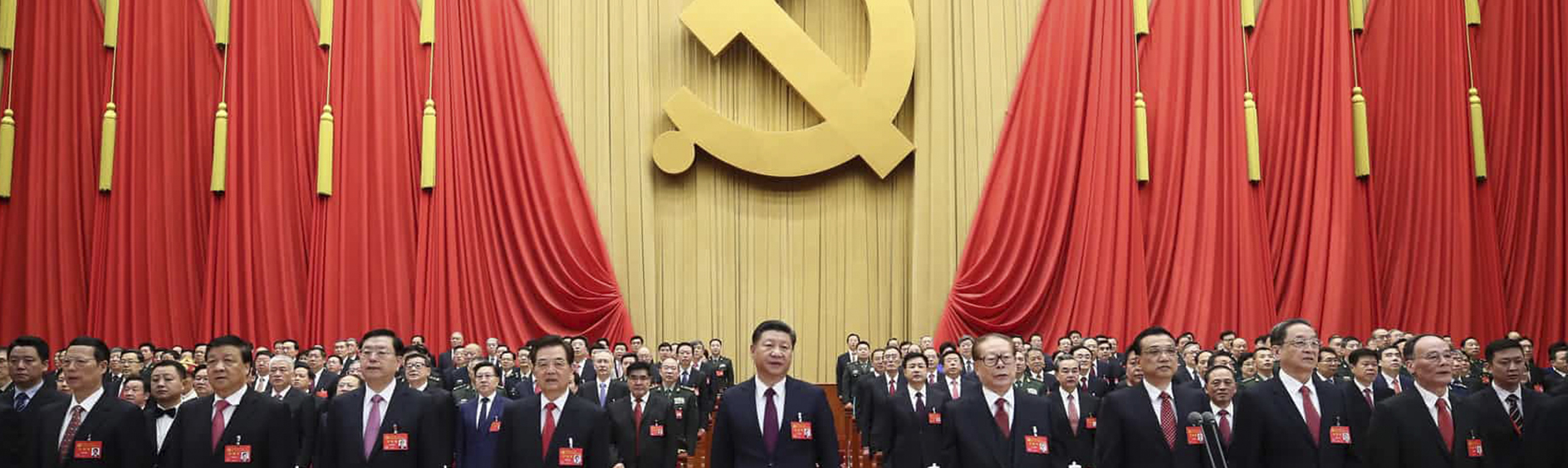
Since states are more significant structures, they realize the problem's existence late and start their search for a solution late. For this reason, states with a highly adaptive system to current conditions have a great advantage. For example, the Communist Party of China and the Russian Politburo are organs with rapid decision-making abilities. Structures with high oligarchic power and weak democratic direction. In other words, they have half of the requirements we expect. I say fate because the mentioned countries have not established their current systems with an in-depth projection of the world's future. These structures were created with other motives. In addition, these systems, which are not democratic, can establish only the substantial state part of the ultimate goal of a "strong state, peaceful nation."
If we talk about a new state management system, it cannot be framed in such a short article. I have written all this to reflect China, which has gained a significant administrative advantage in the current conditions.
The previous US president, Donald Trump, had been subjected to severe criticism and humiliation by the mainstream liberal crew, who thought he was the representative of the modern world and the most advanced group of people, both during and after his election. Since we couldn't fully grasp the subject from Turkey, I asked my nephew, who lives in the USA, the reason for this insult and anger. He replied as follows: "Imagine that Ali Ağaoğlu is the President of the Republic of Turkey; the same thing happened in the USA." At first, I gave the right to the reactions, then I thought…
Over time, we also had the opportunity to get to know Trump. On this occasion, we realized that my nephew's simile was very successful. Ali Ağaoğlu and Trump represent many repulsive aspects of the typology; rude, uneducated, lacking in depth, rude… However, such people have a highly developed pragmatism and simple thinking ability, perhaps because they do not think deeply. His life philosophies are simple enough to fit into a few lines. For example, they understood the power of money over people and focused on making money. They also seem more human to me because they are more manly than hypocritical intellectual liberals.
If the things that matter to you in life are few and clear, you will focus your mind and energy on them, and you will generally be successful. You know, there are the famous inferences that "the answer to a question is usually the first thing you think of" or "the solution to difficult problems seems the simplest." They are not very trivial propositions. As a matter of fact, by considering a large number of parameters, you are more likely to make mistakes in your search for an answer. Here, people like Ağaoğlu/Trump may think simple, but their ability to make the right decision is too good to be underestimated.
Trump constantly brought China to his agenda during his election campaigns, and even a collage of his discourses about China was made and released to the market. The word "Chinese," which is the Chinese pronunciation, was repeated one after the other, giving the appearance of a funny nursery rhyme. We all watched and laughed and had fun, but we didn't realize why Trump was insistently clapping "Çayna, Çayna." Presumably, Trump was thinking money-centered. He saw the economic invasion of China, planned to contribute to the welfare of the American people by preventing this, and calculated that the citizens who had achieved financial comfort would show favor to him in the next elections. Despite all the pots he broke, his rudeness, and his atrocities, he took the election head-to-head with the effect of economic relief alone.
Let's make a comprehensive analysis of China by noting that China is getting closer to the USA in gross national product figures every day. It has been shown as a larger economy than the USA in some calculation techniques since 2019.
The part I'm interested in, China is more of a human-scale problem than an economic-based issue. After transitioning to the communist regime, he lived introverted for a long time and had hegemonic activities only in the neighboring countries. When the USA started to carry the production instruments of capitalism to China to exploit cheap workforce and natural resources in China, many things in the world entered an irreversible path. In fact, the USA planned to dissolve the communist regime by offering the Chinese people the irresistible comfort of capitalism in this way. But it was not expected; the Chinese administration maintained its regime and built a capitalist-communist social life.
Although China was struggling with poverty and backwardness when the West was approaching China, the authoritarian regime somehow did not allow the country to interfere or rebellions. But how long this would last and when the people would attempt to overthrow the regime by burning the ships could not be predicted. The Chinese Communist Party smelled the impending danger once in Tiananmen Square in 1989 and was able to fend off social pressure explosions by murdering nearly a thousand people. But could they not tolerate possible new waves of rebellion? Under these conditions, it gave the green light to the offer from the Western world and opened its doors to the world.
The accelerated growth of China worries all Western countries, which are seen as the world's locomotive, especially the USA, in the long run. So should China's booming rise only worry the West? On the contrary, all third world countries and developing countries like us should tremble more. Before we move on to the reasons for this, we need to read China's government-people relationship correctly.
There are significant differences between democracy and despotic forms of government. I think that these differences sometimes create advantages and sometimes weaknesses. Despotic regimes are directly influenced by the management capabilities of the leading ruler or ruling institution. A good king raises the country, and a bad one destroys the state. Similar to the fact that liquids transmit pressure precisely as it is, the management practices are felt all over the country. This situation is identical not only in the state but also in every organized group such as companies, families, and NGOs. In fact, democratic governments also shape the country socially and psychologically, but their methods are different; they use soft power, and thus the shaping is slower.
People are never free in China. So the restriction continues to accumulate internal anger among the people. With one difference, the rate of anger accumulation is slower. Because many people still remember 30 years ago and are relatively comfortable with the current partial economic and social comfort. China's economic and social openings essentially discharged the intense psychological pressure accumulated in the old regime. At least two generations need to grow into this new status for new anger to accumulate. The Chinese administration, which can take decisions quickly and implement these decisions very quickly and without any objection, is advancing as fast as a galloping horse. For example, to prevent the unstoppable population growth, they brought an obligation to have an only child, and they implemented this successfully. If you tried to implement such a law in the West, hell would break loose. Again in the last covid-19 outbreak, Although they were the first state to meet a new virus, they had the chance to recover very quickly by using ruthless methods. They have brought the pandemic under control with numerous inhumane practices, from nailing people's doors to executions in the middle of the street. If the same methods were applied in the Western world, the ground would be shaken.
Of course, I do not condone these practices. But tens of Western countries, including Turkey, which could not act with the necessary harshness due to the civil objections that are the hallmark of democracy, are paying heavy bills due to the pandemic. Due to the uncontrollable epidemic, many people died, there were economic bottlenecks, and it will be experienced more intensely. When you add the social and psychological damages, other countries will have suffered the worst of the cruelty that China has inflicted on its people due to the pandemic in the long run.
When all this turmoil is over, countries will take a few steps back, while China will come forward with many advantages. It had already gained momentum, and now it will be deployed even stronger. Many people claimed that there would be an escape from China after the pandemic, and we believed in these sweet dreams. Capital thinks very simply. He does not give up on a place where he can produce goods of the desired quality at a lower cost.
Moreover, China has blatantly raised its quality standard, which is its biggest weakness. So much so that they have become able to compete with their brands in almost every sector. In the next 20-30 years, I think that the "made in China-poor quality" wingman will disappear.
In short, China is rising unstoppably. In the second half of this century, our agenda will not be the USA but rather China. You can say, "Take one and shoot the other." It's not like that. How Does?
The Chinese civilization is the fourth ancient civilization that left its mark on world history after Mesopotamia, Egypt, and Indian civilizations. In addition to its technical inventions such as paper, gunpowder, silk, wheelbarrow, the compass, kite, seismograph, it is a civilization that has shaped the world in many human subjects such as social organization, human resource analysis, philosophy, and urban planning. They have a life cycle that is quite different from the culture we are accustomed to, from architecture to calligraphy, from food varieties to entertainment methods. As a natural extension of this, we can say that mental structures and perceiving notions are much different from ours. When I say we, I don't just mean Turkey, I mean the rest of the world.
If we take a look at the existing cultures, we see that the change between them is gradual. Arabic beyten, Turkish pide, Greek pita, and Italian pizza (pronounced pitza) are good examples of this. Both their tastes and names are similar but still different from each other. However, you will find that the culture of China and Southeast Asia has little in common with the Russian and Indian civilizations, let alone us, geographically neighboring the region. There are strong historical, geographic, genetic, and demographic reasons for this. Look at the physical map below. You can see that the Himalayan heights extending along the West of China continue almost to the coast and separate China and the surrounding countries from the West, starting from Bangladesh. In addition, the great Central Asian deserts (Gobi and Taklamakan) in the West and north and Siberia appear as natural geographical barriers that cut off the communication with the West to a large extent. The vast Pacific Ocean lying to its east was already an endless ocean of unknowns until recently.
On the other hand, the natural resources and human numbers of Far Asia were plentiful enough to build a civilization. He had some social contact with Turkish and Mongolian civilizations when Central Asia was not yet deserted, and its population was dense. However, this relationship, which included constant tension, did not establish profound cohesion. Anyway, China was not happy with this relationship. They built the Great Wall of China for this reason. Yet China's relationship with the Turkic and Mongolian peoples was undoubtedly stronger than in the Indian basin. We can deduce this from human phenotypes, from language connections. The Himalayas were such a strong barrier that it kept Indian and Chinese cultural exchanges almost non-existent.
Although the region where the Chinese lived was not as much as India, it was a fertile area and had the capacity to feed a large population. Even five centuries ago, China's population stood at over a hundred million. There is a direct parallel between civilization and people. Naturally, they had everything necessary to build a strong civilization without the need for outside help or interaction, and indeed they succeeded. The history of China, like other civilizations, has been the scene of internal conflicts rather than international struggles. In the period of stability, which was captured in the era of the dynasties that ruled for certain periods, the steps of the civilization process were somehow able to be taken.
There have been five periods of great famine in Chinese history, and in each of them, tens of millions of people died of starvation. Usually, when there is famine caused by soil salinization or climate-related drought, the region's people prefer to migrate to more productive places. For example, the Turks moved from Central Asia to the West and the Sumerians from Mesopotamia to the north through great migrations. The geographical barriers that I just mentioned have created such strong borders in the collective mind of the Chinese that the Chinese did not think of migrating in times of drought and tried to survive in the current conditions. Of course, this painful process has had dramatic effects on Chinese culture and has led to the development of Chinese food culture, which is strange or disgusting to all of us today. You know, they say, "hard breaks the man." In order to survive in times of famine, the Chinese also used mice. They ate from snakes, centipedes to all insects, from bats, monkeys, pangolins to all wild animals. They have even been the place of their ancient friends, such as cats and dogs, who have been the companions of people for centuries. Maybe they also ate with disgust at first, but after a while, their habit and taste will have developed that these animals have become a part of their culinary culture.
When we say Chinese culture, we should not only think of people living within today's Chinese state borders. We are talking about a wide basin from Korea to Laos, Vietnam. Since this region rotates within itself, it has always been away from the rest of the world. As a matter of fact, it has taken place in the minds as a mysterious and interesting region. Although trade continued on the Silk and Spice Routes, a limited relationship could be established with the access of a limited number of traders to specific regions. Marco Polo was the name that brought China to the world's agenda socially, geographically, and culturally. During the reign of Kublai Khan, the Mongol-origin Chinese emperor, Marco Polo spent a long period of 24 years in the Far East, 17 of which were in China. 14th century As of today, China has begun to enter Europe's radar.
Nevertheless, China's occupation of the agenda as an essential region took place after centuries. Consider that China is so far from Europe's agenda that the eastern edge of the world has always been conceived as India. When Alexander the Great conquered India, he thought it was based on the Eastern border of the world, the 15th century. Even in India, the ultimate goal of the sailors who set out for geographical discoveries has always been India. In fact, when they reached the Caribbean, they thought that they had reached West India and called the region West Indies. Looking from today, it may look hilarious. "How could they ignore the huge Chinese basin, further east of India, where hundreds of millions of people live?" you can say. But that's what happened. This is the best proof that China is a closed-circuit civilization, which I tried to outline in the previous paragraphs.
The Western world has targeted China since the 19th century, long after the geographical discoveries began, and the first serious confrontation of two crucial cultures took place in this period. China could not resist the Western culture, which had risen with great struggles, and took its place among the last victims of Western imperialism.
I would like to mention two interesting differences here. The first is gunpowder. Their own children, gunpowder, discovered by the Chinese but used in the fireworks and entertainment industry, appeared as monsters that flew cannonballs and rifle bullets when they encountered the West. The second is the Turks. After the Turks, who had been a nuisance to the Chinese for centuries, migrated from Central Asia to Anatolia, they narrowed the world to Europe. In other words, the pressure of the Turks to the West caused trouble for the Chinese by traveling around the world, this time by sea from the eastern front.
From the 16th to the 20th centuries, the West was engaged in materially exploiting the world. At that time, they had neither the time nor the equipment to devote to cultural imperialism, and self-made wannabe cultural assimilations were limited. Therefore, China escaped the first invasion of the West (especially Britain) with more material damage, not counting the mass drug addiction. However, from the 20th century onwards, he returned by adding the invasion movement through Western cultural instruments to his portfolio. We can see that countries such as Japan, South Korea, and Vietnam were exposed to cultural erosion, especially after World War II. As a coincidence of luck, the USA, which was exposed to the attack of Japan in the 2nd World War and had to, China, which had to fight on the side of Russia and England, took the seat on the winners' front when the war ended (1945). Thus, it was not attacked by an imposing Western culture like Japan was exposed to. Soon after, it went to the communist regime (1949) and gained an iron curtain country's identity and was able to protect itself from the mild cultural imperialism that Korea would later experience. One hundred ten years after the 1839 British intervention, it came to the 1990s as a closed culture, just like ancient China.
I told all this to illustrate that China still has its own, ancient culture. Soon, we will have to confront China as a rapidly growing economic and military reality, which has somehow managed to preserve its cultural elements. In the last section, I will analyze the danger that awaits us by making projections.
Adjusted by the Tiananmen Uprising of 1989, China soon responded positively to the West's offer to "open its doors and relax." But the iron curtains were not wholly lifted, only part. The Chinese Communist Party (CCP) made serious preparations for this opening.
Thus began a chess match in which the board was Chinese territory, and the pieces were the Chinese people. The West is very adept at such strategic games. But the CCP has also shown that it is not empty at all. Moreover, he had a significant advantage by hosting the game. Let's take a look at what happened during this expansion process.
With China opening its doors to foreign capital, there was no headlong investment move. As the gradual incoming capital made more industry and technology investments, the Chinese also strengthened their own industry by transferring knowledge and technology quickly in this process. They began to appear in the free market of the world, imitating not only technical knowledge but also commercial organization and marketing methods. Previously, they made room for themselves with products of low quality and price. Maybe they didn't have a chance in rich geographies. But the goods they produced were trendy in the middle- and low-income countries. In this process, the industrial establishments of many countries, including Turkey, had difficulty in competing with these products and weakened.
Of course, it won't be like this forever. Because the level of prosperity of China, whose trade volume and earnings are increasing, is gradually increasing. The cheap labor dynamic, which gave it a considerable advantage in the market, has weakened over time and will continue to weaken. In addition, subsidized raw material stocks, which are China's other major trump card, will gradually decrease, and prices will be increased. So they wouldn't be able to last long with cheap Chinese goods. Being aware of this, the CCP directed its people and companies to create middle and upper-class goods by creating added value for their products instead of competing with cheap labor and raw materials. They have already managed to capture a significant market share in the first-class products of some sectors.
The Chinese state's deep wisdom put into practice through the CCP seems to have failed the West's expectations. The West, which thought that democratic pursuits would emerge through the prosperity and freedoms that became widespread among the Chinese people, set out with the aim of both exploiting China's cheap labor force and exporting the regime in this way. The expected dissolution in China did not happen. The CCP did not give this opportunity to the West, which has a high tradition and skill in using instruments in democratic environments. Currently, we are faced with a China that has increased prosperity, modernized cities, growing infrastructure investments, strengthened industry, and advanced technology. But they did not compromise the absolute dominion he established over his people.
At first glance, you might think that China was influenced by the cultural hegemony of the West. The shopping density has increased, and the entertainment industry has made expansions. The Chinese added names of Western origin to their authentic names. The use of luxury goods has increased. There are hundreds of thousands of Chinese who go abroad for education, trade, or touristic purposes. Clothing styles have changed. Isn't all this a cultural surrender to the Western way of life? We can observe that this is not as thought for several reasons.
There are always mutual exchanges in cultural encounters. This is not a dynamic that can be stopped. Elements in the counterculture that will not damage your cultural codes but will also offer life comfort and practicality can easily penetrate your culture. The same risk applies to the counterculture. The Chinese state would also consider such a cultural change reasonable. But what we have just mentioned seems to have exceeded the acceptable level. There is a reason for that too.
The sun is not covered with mud. No matter how much we deny it, no matter how hard we try, we must accept that the English language is the universal language and Western culture is the dominant civilization. In other words, if you have global goals, you will not get anywhere by ignoring the existing cultural tools. For example, the CCP could have banned its citizens from using Western names, and it has the power to control it effectively. But they do not raise their voices because they know that it strengthens their hand in global communication. Maybe they implemented this practice underhandedly themselves. I guess China will allow such practices until it reaches the level where it can effectively touch cultural codes globally.
China has a very strong monitoring and monitoring system for its citizens. The electronic Big Brother system, which came to the fore during the pandemic, seems to have even followed the breathing of the Chinese. But what I really want to emphasize is the way the authority aligns the Chinese who go abroad. You know, in the past, if the citizens of the Iron Curtain country, who went abroad for a reason, could get the opportunity, they would apply for asylum and would not return to their country. For this reason, intelligence agents were always assigned to accompany groups going abroad. There would already be a limited number of overseas outlets. But now, when they visit abroad for education, tourism, trade or diplomacy, the Chinese travel by waving their arms. Except for the Uyghurs, who are under intense assimilation pressure, not a single person seeks asylum from the West. An important reason for this is that China is not as suffocating as it used to be (with the exception of East Turkestan). Secondly, asylum seekers estimate what might happen to their relatives and their assets left in China.
The CCP, which took over Hong Kong from a century of British rule in 1997, used its strategic mind here as well. There was a gap between Hong Kong's income level and the rest of China. There was also an established British way of life and culture in Hong Kong. It kept the region semi-permeable with mainland China, with a special status granted to Hong Kong rather than directly integrated. Full integration is likely to be achieved in the future.
I gave all these examples to explain how the CCP's vision for China in the 21st century was determined after careful consideration. China is an excellent example of my claim that I have emphasized in the first part of the article, that governments with strong intelligence and authority will give their countries a strong momentum in the new period.
From this point of view, it is not difficult to predict that from the second half of the 21st century, China will first establish economically, then military, and then cultural dominance in the world. Of course, the hardest part is dealing with psychological, cultural superiority. Although China seems to have adopted the cultural codes of the West, it will begin to impose its own rules after crossing a certain threshold. There is a strong national consciousness among the citizens of China, which has managed to keep its culture alive and intact with the help of its geographical and historical luck.
Right here, let's try to understand what the Western civilization, which has been the master of the world for nearly three centuries, and the expected new master Chinese civilization mean for us. Since my youth, economic and cultural Western imperialism has constricted my soul, and I have spent a lifetime resisting it. But I can already say that we will search for the West we hate with a candle.
We have heard many hypocritical, sneaky, and slippery comments about the character of the Chinese people from our friends who spent a long time in China. We know that there are similar evaluations in old Turkish sources. You will say, "Is the Western man any different?" Yes, we can say that the West is not much different in state ethics. But the human average is relatively smooth. Therefore, the West has a regulatory mechanism to control the instruments of exploitation with a certain degree of human sensitivity, based on the reactions that may arise from its own people. It does what it would do again, but at least it numbs your arm before it rips off.
The bourgeoisie in the West has a 5-10 century history of struggle and a strong mind. In this way, states have very serious effects on their decisions in both domestic and foreign policy. In fact, according to some political thinkers, the main reason for the existence of states in the West is to protect the interests of companies. Do not be misled by the fact that China is the country with the most millionaires worldwide after the recent breakthrough. Capital in China was able to flourish with the environment prepared by the state and the dynamics it managed. Do you think that the Chinese state will leave the Chinese bourgeoisie, which does not have a strong tradition of rebellion like in the West, and which it raised by its own hands, on its own? Be sure that the CCP, which monitors every step taken even by its ordinary citizens, is controlling the capital movements to the millimeter. In this context, we cannot talk about a capital that impacts state policies as in the West.
China's hegemony over the world will be a painful transition due to the paradigm shift, if nothing else. Let's put aside the concrete difficulties of our young people, whose stomachs are cracking while learning English, one of the easiest languages globally, struggling with Chinese, which is one of the most challenging languages with its alphabetic and grammatical content. Let's think about how we will get used to or tolerate the mentality of the main Chinese state.
Can you imagine how a nation with savage food culture, a brutal historical past, and high chauvinistic feelings can become cruel when it comes to power? Citizen sensitivities that partially stabilize or restrain the state in the West do not apply to China. Moreover, it is a state that can manage all the economic and cultural output of the country from a single center and use it when necessary.
In short, when he picks up the Chinese instrument, he will play whatever song he wants. Do not look at the soft power appearing in the markets nowadays. When the time comes, he will not hesitate to drop his iron fist on the third world countries, just as he did on his own citizens. We got used to eating with a fork, wearing a tie, sweetly, through cultural assimilation. But they can hold a gun to our heads so we can use chopsticks or wear kimonos in the future.
China scares me a lot. Another thing that scares me is supporting the Western world, which we have attacked with a lifetime of blasphemy and hatred to curb the danger of China over time. Don't you think it's spiritually frightening that your philosophy, to which you dedicate your whole life, has undergone such a contradictory turn?